Music
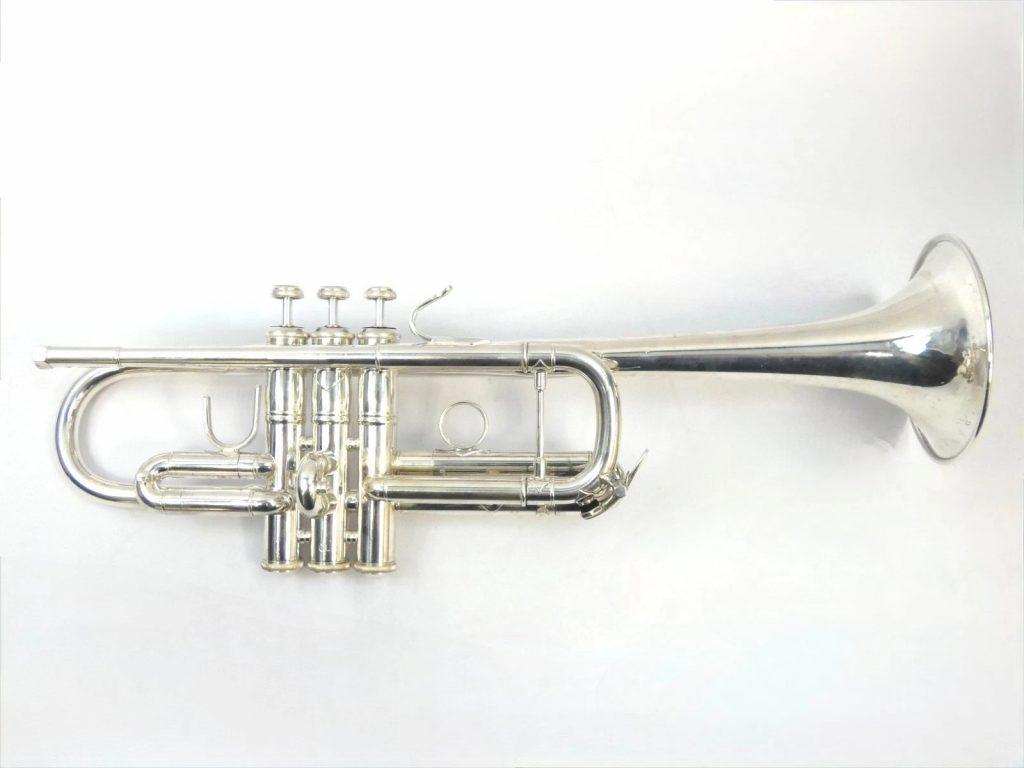
The Trumpet Chapter of My Life:
In Wheeling, West Virginia, I was fortunate to grow up immersed in the arts. The Ohio County School system had an exceptional music program, with strong elementary and middle school feeder programs that led into the arts centerpiece of Wheeling Park High School. WPHS—known simply as “Park”—was a school where the 100-member marching band carried the nickname “The Pride of Ohio County.”
When I joined Park in 1995, the marching band uniforms were styled as American Revolution colonial patriot uniforms. Today they resemble modern Drum and Bugle Corps attire, still honoring the Patriot tradition with a sequined eagle on the chest and a silver helmet topped with an ornate feather. But the original Patriot uniforms were my favorite.
When I first joined the Park Band, I was a nervous wreck. During band camp I drank stomach medicine every morning just to keep from vomiting due to nerves. It was intimidating to be a freshman in a marching band of more than 100 members. We performed complex field shows using dot-books—small notebooks each student carried that showed their exact “dot,” or position, on the field. Each dot aligned into patterns, and every scene flowed into the next in fluid motion, paired precisely with music. It was not easy. Park made the process structured and manageable.
At the time, the directors were Mr. Garrett and Mrs. Garrett, along with other faculty. Each student received a dot-book and spent long summer hours—before school even began—and many demanding hours after classes practicing formations and memorizing music. Entire shows, usually five pieces, had to be memorized. You had to play your part from memory in front of your section leaders or the full section. I did this for four years, performing in four different Bands of America class shows. Bands of America was the national high school marching band competition, often held at WVU’s stadium in Morgantown. Every year I attended Park, we placed in the Top 10 Finals; one year we placed in the Top 5. Kiski and Norwin from the Pittsburgh area were often alongside us in those rankings. Sometimes they won.
Beyond marching band, Wheeling Park offered numerous ensemble and solo opportunities that were difficult to replicate at The Linsly School or Central Catholic. John Marshall was and is a good school, but in the 1990s and early 2000s it did not match what Park provided musically. Some might disagree, but my exposure at Park was shaped directly by Mr. Garrett, who was also a symphonic-level brass musician. That combination—public school director and professional-level musician—is rare and demanding.
Winning a position in a symphony or youth orchestra is highly competitive. A trumpet player must be strong enough to perform their individual part confidently while blending seamlessly within the section. I was a strong player in high school, yet I never held the permanent first trumpet position in orchestra, except for some piccolo trumpet parts with Park Orchestra. Mr. Garrett allowed qualified students to rotate into principal roles for performance experience. At Festival of Sound, I had the opportunity to perform as Principal Trumpet with orchestra. Otherwise, I typically played second trumpet or utility third, which often sat second on two-part youth orchestra repertoire.
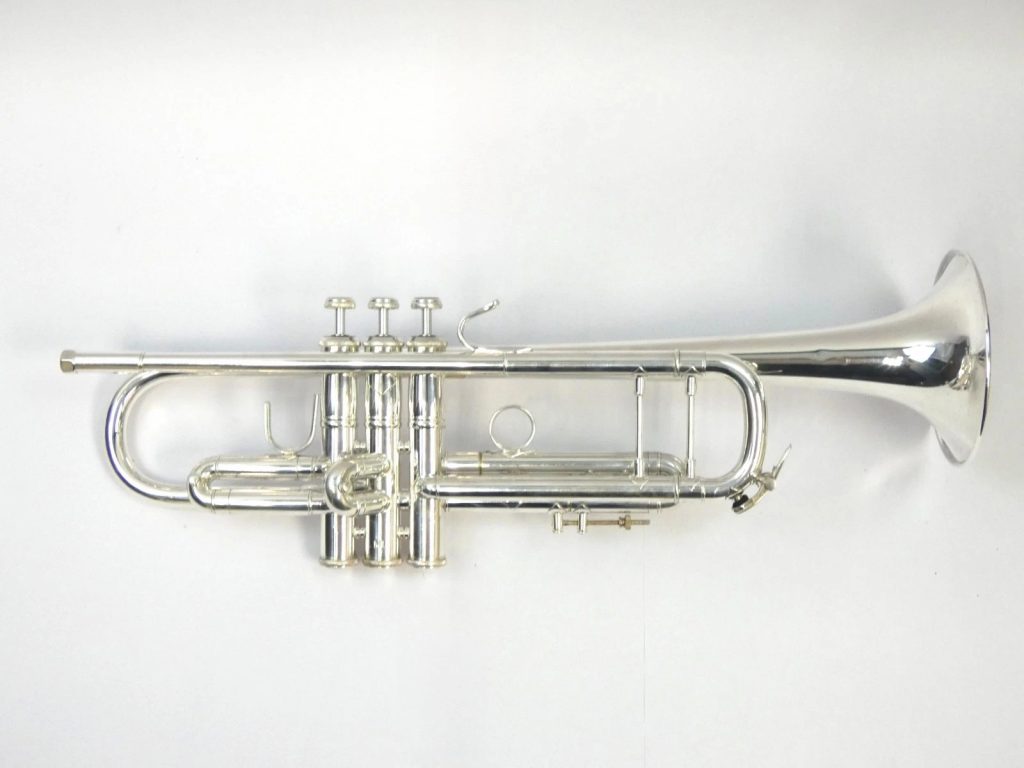
My first major youth orchestra experience was the Wheeling Symphony Youth Orchestra Camp. The brass section leader that year was the Principal Horn of the Wheeling Symphony Orchestra. At the time, I played a Bb Bach Mercedes trumpet—a solid intermediate instrument, and an upgrade from the Bundy student trumpet I had played from ages nine to thirteen. By age sixteen, after earning a spot in Park Jazz Band as third or fourth trumpet, I was permitted to upgrade to a Bb Bach Stradivarius with a 43 bell, known for its brighter tone.
At the youth orchestra camp, we received private lessons from the acting Principal Trumpet of the Wheeling Symphony. Dr. John Winkler, the longtime head of the trumpet studio at WVU, was away performing at a Christian music camp, so the acting principal was Charles “Chuck” Lirette, Co-Principal Trumpet of the Pittsburgh Symphony Orchestra. Mr. Lirette was a powerful orchestral player and demonstrated what projection truly meant in that setting.
That year I participated in a Side-by-Side concert, where one student per section performed alongside the Wheeling Symphony Orchestra. I represented the trumpet section. We played John Williams’ “Cowboy Overture” and music from E.T. The Extra-Terrestrial. Some passages were above my comfortable range. I did not yet know how to play those notes reliably. The professionals told me to play what I could, or take passages down an octave and blend. It was humbling and formative. It showed me how far I still had to go.
I later auditioned for Ovations Youth Orchestra under a conductor named Mrs. Betsy, whose last name I no longer recall. She was a strong musician and conductor. My friend and classmate Rachel won the principal trumpet position; I earned second trumpet. Rachel had entered Jazz Band as a freshman due to her talent and mature tone, developed under excellent instruction. When I began studying with her teacher, I learned flow studies that deepened my tone significantly.
I later transferred to Bill Arn, an Eastman School of Music graduate and former member of the Rochester Philharmonic. He emphasized lyrical playing, fanfare style, Vincent Cichowicz flow studies, and required me to work from the Arban method book—the foundational trumpet text containing hundreds of pages of exercises, etudes, and solos. I continued using Arban throughout college.
In Ovations we performed challenging but manageable repertoire. Rachel and I rarely struggled technically. It was enjoyable, and I miss making music with friends. One major highlight was our tour of Australia. We flew from Pittsburgh to Los Angeles, had a long layover that included a group visit to Universal Studios, and then boarded a Boeing 747 for a flight of roughly nineteen to twenty-three hours. We left the United States in summer and arrived in Australia in winter temperatures near 30°F.
We toured multiple cities, including Sydney and Canberra, and stayed with host families. Three or four of us would stay together in homes that typically relied on space heaters rather than central heating, making nights cold. The time difference was disorienting—when I slept, America was awake; when I was awake, America slept. The myth about toilets flushing backward proved false. Vegemite, a salty yeast extract spread, was memorable for its intensity. We rehearsed and performed in tuxedos at the Sydney Opera House. Standing for the trumpet part of “The Stars and Stripes Forever” in that hall was a moment of pride.
During my junior year at Park, I auditioned for Roger Sherman, then fourth trumpet of the Pittsburgh Symphony Orchestra, and earned a position in TRYPO—the Three Rivers Young People’s Orchestra—under Dr. Christianson. Both men have since passed, but their influence remains with me. Section assignments were guided by Jordan Winkler, then Principal Trumpet of the group and son of Dr. John Winkler. Jordan asked directly whether I was strong enough to hold second trumpet reliably. I said yes, and he placed me in the role. I worked to meet that expectation.
Jordan and I became close friends. We practiced, made home movies, and played PlayStation together during orchestra seasons. He later served as Solo Cornet with the River City Brass Band after studying at Carnegie Mellon with George Vosburgh.
In 1997, Jordan and I attended the Cincinnati Conservatory of Music summer camp, where we studied with Tim Morrison, the Hollywood studio trumpeter who performed solos for John Williams, James Horner, and Hans Zimmer. Morrison had been Principal Trumpet of Empire Brass and easily the most lyrical trumpet player alive today. He described the reality of studio work: minimal preparation time, a red recording light, and the expectation of flawless sight-reading. That is the professional standard.
John Williams wrote the Olympic piece “Summon the Heroes” for the 1996 Atlanta Games and dedicated the trumpet solo specifically to Tim Morrison. The CD liner notes read, “For Tim Morrison.” It is an extremely demanding solo. During my lesson, we worked on the Promenade from Mussorgsky’s Pictures at an Exhibition. The story tells of man walking a museum looking at paintings. I struggled with pacing and style. Morrison said, “It’s okay, it’s hard. Keep practicing, you’ll get it Andy”.
In TRYPO we performed Brahms’ Symphony No. 2 and other demanding brass repertoire at Jordan’s request. The experience solidified my technical foundation and ensemble discipline.
Ultimately, the public education system in Wheeling provided a structured and rigorous path that prepared me for professional-level trumpet study and entry into a conservatory program at Duquesne.
Looking back, what stands out is not a single performance or accolade, but the sustained discipline of it all. The memorized shows under stadium lights, the auditions where one missed note mattered, the long rehearsals in cold halls and hot summers—those experiences built more than range or endurance. They built internal standards. Music demanded accuracy, humility, preparation, and the ability to function inside a team where individual ego had to submit to collective sound. That training does not fade.
I did not become a full-time orchestral trumpeter, but the pipeline was real. The teachers were real professionals. The expectations were professional. The exposure—to symphony musicians, conservatory faculty, studio artists, national competitions—was not abstract. It was concrete and rigorous. When I later stepped into conservatory study at Duquesne, I did not feel unprepared. The foundation had already been laid in public school classrooms, rehearsal rooms, and youth orchestras across West Virginia and Pennsylvania.
Music also shaped how I think. Trumpet playing is a study in physics and psychology: air support, resonance, embouchure mechanics, timing, and the constant negotiation between confidence and restraint. It rewards patience and punishes tension. It demands projection without aggression, blending without disappearing. Those paradoxes mirror life more closely than most people realize.
In the end, I am grateful for the ecosystem that surrounded me—directors who expected excellence, peers who pushed me, mentors who modeled professionalism, and institutions that treated young musicians seriously. That environment proved something simple but important: rigorous public arts education can produce real, high-level preparation. The lessons from those years remain active, even when the horn is in its case.